

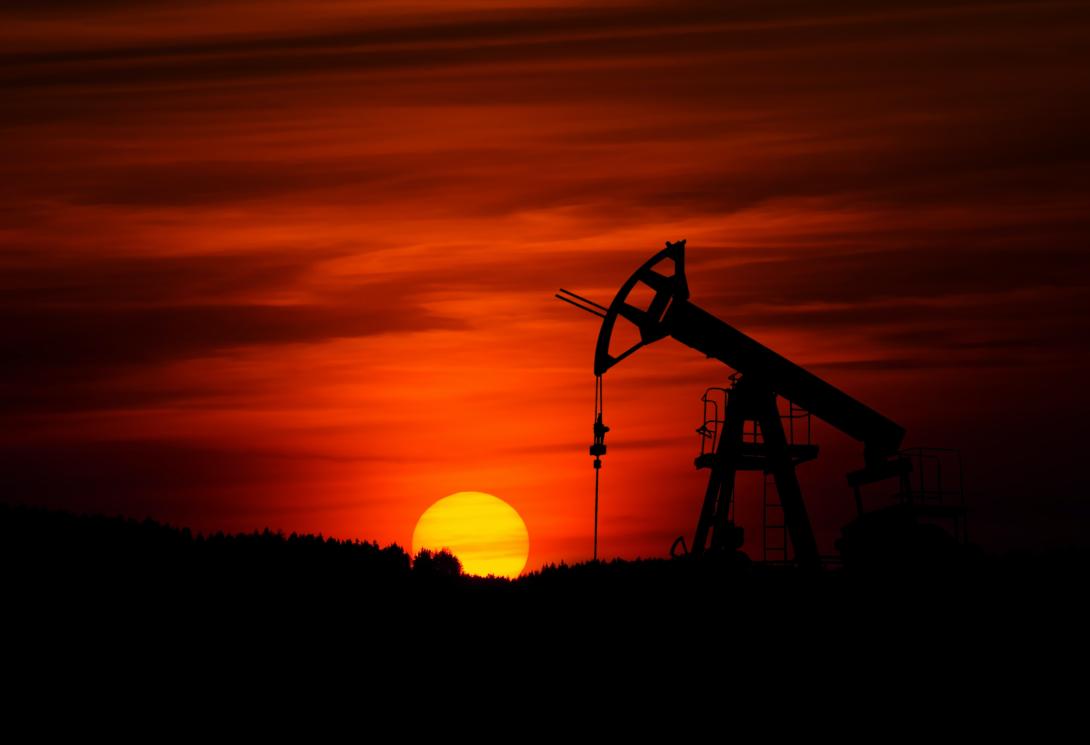
Ending fossil fuel expansion
Too many Nordic banks and pension funds continue to ignore climate scientists’ call for an end to fossil fuel expansion.
While climate experts are issuing more and more dire warnings of what will happen if we fail to transition into a 1.5°C world, the biggest Nordic banks and funds continue to pour billions of dollars in financing and investments into coal, oil, and gas companies planning new fossil fuel projects that will bring this global climate goal out of reach. The International Energy Agency (IEA) makes it clear that there is no room for new oil and gas fields in a 1.5°C pathway, nor is there room for new coal mines, mine extensions, or new coal plants.
Regardless, Nordic banks have provided $31 billion in finance to coal expanders and expanding oil and gas producers, since the Paris Agreement in 2015. The banks also hold investments worth $6.0 billion in coal expanders and expanding oil and gas producers. In addition to this, investigations by Nordic Center for Sustainable Finance and Urgewald reveals that the Norwegian people’s pension fund, the Oil Fund, holds investments worth $87 billion in expanding coal, oil, and gas companies, while Denmark’s 16 largest pension funds have invested $3 billion.
Our research also uncovered that Norway spent up to $1,1 billion of taxpayer-backed money on international public finance for fossil fuels. This was through its export credit agency, Eksfin, between July 2021 and June 2023.
These financial flows link Nordic financial institutions to highly controversial coal, oil, and gas projects. The list of funded activities includes drilling that threatens the sensitive ecosystems in the Arctic and the expansion of a coal mine in the Czech Republic that could lead to the emission of at least 60 million extra tons of CO2e. It also includes the controversial oil pipeline EACOP in Eastern Africa, which has allegedly forced 100.000 people to leave their homes or their farmland and destroyed habitats for endangered species.
Stopping the money behind fossil fuel expansion
At the Nordic Center for Sustainable Finance, we aim to stop this money flow.
We hold the financial sector accountable by scrutinizing and exposing its continued support for fossil fuel expansion. Through media work, dialogue, and advocacy, we push private financial institutions to change their fossil fuel policies and demand that our politicians restructure the financial sector so that it can accelerate the transition away from fossil fuels.
We engage with politicians on both national and EU levels, proposing a toolbox of regulatory measures. This includes a ban on financing of and investments in, projects that expand coal, oil, and gas production, as well as the companies behind these projects.
We push green frontrunners among the Nordic financial institutions to advocate for policies and frameworks that support the green transition. We strongly believe that the Nordic financial sector could play a much bigger role in ending new coal, oil and gas, and we are focused on making that happen.
In June 2026, we initiated a letter in collaboration with Sampension asking the EU to maintain its opposition against new oil and gas in the Arctic. 200 actors joined the letter, including a dozen major Nordic and European investors.
The Nordic region is home to the world’s largest sovereign wealth fund (the Oil Fund), two of the world’s biggest banks (Nordea and Danske Bank), and has the third-largest pension market globally, trailing only the US and Japan. If Nordic financial institutions divest from fossil fuel expansion and start speaking out, the global impact would be significant.
Our impact: Creating Nordic frontrunners in fossil free finance
Nordic banks
As a result of the pressure and attention we have managed to create together with our Nordic partner organizations, five Nordic banks have made groundbreaking policies that prevent them from granting new loans or refinancing to fossil fuel companies that still expand their fossil fuel production. The five banks are: Danske Bank, Nykredit, Handelsbanken, Swedbank, and OP Financial Group. Three Nordic banks, Handelsbanken, Swedbank and SEB, have also introduced policies that have led to a full divestment from these companies. On top of this Danske Bank, Nykredit and OP Financial Group have introduced new fossil fuel policies that have led to the divestment from almost all expanding oil and gas producers.
Danish pension funds
In Denmark, we collaborated with other organizations and together we successfully got a wide range of smaller pension funds to completely exclude investments in expansion. This helped us build the pressure needed to make the three biggest pension funds in Denmark; Velliv, Danica and PFA follow suit and wave goodbye to almost all of their investments in coal expanders and companies expanding their oil and gas production.
International public finance
After we exposed Denmark’s international public finance for fossil fuels, the Danish government announced that Denmark would end all international public finance for fossil fuels in 2021. Denmark was one of the first countries in the world to make this commitment and later became one of the first countries to sign the historic agreement Clean Energy Transition Partnership (CETP). In 2025, CETP had 40 signatories and had shifted billions of dollars from fossil fuels to renewable energy every year.
From 2022, we turned to Norway’s public finance for fossil fuels. Already a year later, at COP28, Norway’s prime minister, Jonas Gahr Støre, announced that Norway was joining a historic commitment to end international public finance of fossil fuels, after sustained campaigning by the Nordic Center for Sustainable Finance and international partners. The agreement, called the Clean Energy Transition Partnership (CETP), has 40 signatories and has already shifted billions of dollars a year from fossil fuels to renewable energy.
RESOURCES
Two years down the line: Danske Bank in breach of its acclaimed policy on fossil fuels
July 2026
In February 2024, Danske Bank adopted a fossil fuel policy with ambitious restrictions for upstream oil and gas expansion. The policy has been praised for its alignment with climate science. Two years after Danske Bank’s adoption of the policy this analysis sheds light on how the bank’s exposure to fossil fuel expansion has changed and reveals that Danske Bank holds investments worth billions against their own rules.
Open letter to the EU: Do not open the door to new oil and gas in the Arctic
June 2026
The energy crisis has led the EU to reconsider its opposition to Arctic oil and gas. Now, 200 investors, businesses, researchers, trade unions, think tanks, NGOs and public profiles are urging the EU in an open letter to stand firm. Walking back on the moratorium included in the EU's current Arctic Strategy would carry serious climate, environmental, financial, and security risks for Europe. The answer to Europe's energy future lies in the green transition, not in new fossil fuel frontiers.
Breaking Bonds
February 2025
This report finds that the Norwegian Oil Fund holds $6.15 billion in bonds in 39 oil and gas companies that are actively pursuing expansion projects incompatible with global climate goals. Among the 15 companies most financed through bonds by the Norwegian Oil Fund’s asset manager, NBIM, are global majors such as TotalEnergies, Exxon Mobil, BP and Eni. All of these companies are developing numerous controversial new oil and gas projects and lack credible transition plans.
Banking on Thin Ice III
January 2025
This report shows, that while climate experts are issuing more and more dire warnings of what will happen if we fail to transition into a 1.5°C world, the biggest Nordic banks continue to pour billions of USD in financing and investments into coal, oil, and gas companies planning new fossil fuel projects that will bring this global climate goal out of reach. In the past two years (July 2022 to June 2024), the nine biggest Nordic banks provided $4.9 billion in financing to coal expanders and expanding oil and gas producers. DNB, SEB, and Nordea account for 95 percent of these loans.
Since the adoption of the Paris Agreement, the nine banks have provided a total of $31 billion to these companies. The nine biggest Nordic banks also hold investments worth $6.0 billion in coal expanders and expanding oil and gas producers. DNB and Nordea account for 60 per cent of these investments. For coal expanders specifically, Nordea accounts for 52 percent of the investments, totaling $407 million.
Roadmap to a fossil free finance sector
September 2024
In this roadmap we present 11 recommendations for political action the Danish Parliament can take to reduce the massive climate footprint of Denmark's financial sector. The Danish National Bank have recently published new calculations of the sector's financed emissions that puts the climate footprint of investments in listed companies at 100 million tonnes of CO2e - which is more than double the amount of the national footprint. Still, there is no green political strategy for the financial sector.
Danske Bank's policy on fossil fuels - an example to follow
March 2024
Danske Bank's new fossil fuel policy will see the bank divest from nearly all of the fossil fuel companies in its portfolio. The change has made Danske Bank one of the international climate leaders in the financial sector, setting an example for other banks and pensions fund to follow.
Fuelling the Fire
November 2023
This analysis finds that Eksfin, the Norwegian export credit agency, provided up towards USD 1 billion to fossil fuels from July 2021 to June 2023.
DANISH PENSION FUNDS' CLIMATE BETRAYAL
October 2023
This reports uncovers that 16 Danish pension funds have invested almost 25 billion DKK in the worst fossil fuel companies and their extraction of coal, oil, and gas. It also highligst significant differences in the climate behavior of the Danish pension funds. While PFA and Danica together account for 42% of the sector's most polluting investments, AP Pension and AkademikerPension only account for 1.3%.
Banking on Thin Ice II
November 2022
This report provides an overview of the financial relationships between 10 major Nordic banks and the fossil fuel industry, as well as the policies the banks have in place to regulate their links to the industry. From July 2020 – June 2022 the 10 banks have provided in total US$ 21.2 billion in loans and underwriting to the fossil fuel industry. Their total financing now amounts to US$ 89.7 billion since the adoption of the Paris Agreement. On average, there is a decreasing trend in oil and gas financing since 2016, driven mostly by Nordea and SEB. However, financing for companies expanding fossil fuels and coal companies has remained stable.
Danish Pension Funds´ Ticking CO2 Bomb
October 2022
Danish pension funds are investing billions in 93 oil and gas expansion projects.
THE CLIMATE FAILURE OF THE DANISH PENSION SECTOR
February 2022
This report uncovers how the 16 largest Danish pension funds have invested 46 billion DKK in fossil fuel companies.
Banking on Thin Ice I
February 2022
This report provides the first ever overview of the financial relationships between 10 major Nordic banks and the fossil fuel industry, as well as the policies the banks have in place to regulate their links to the industry.